Predictable income
Feast or famine is a billing model, not a personality trait
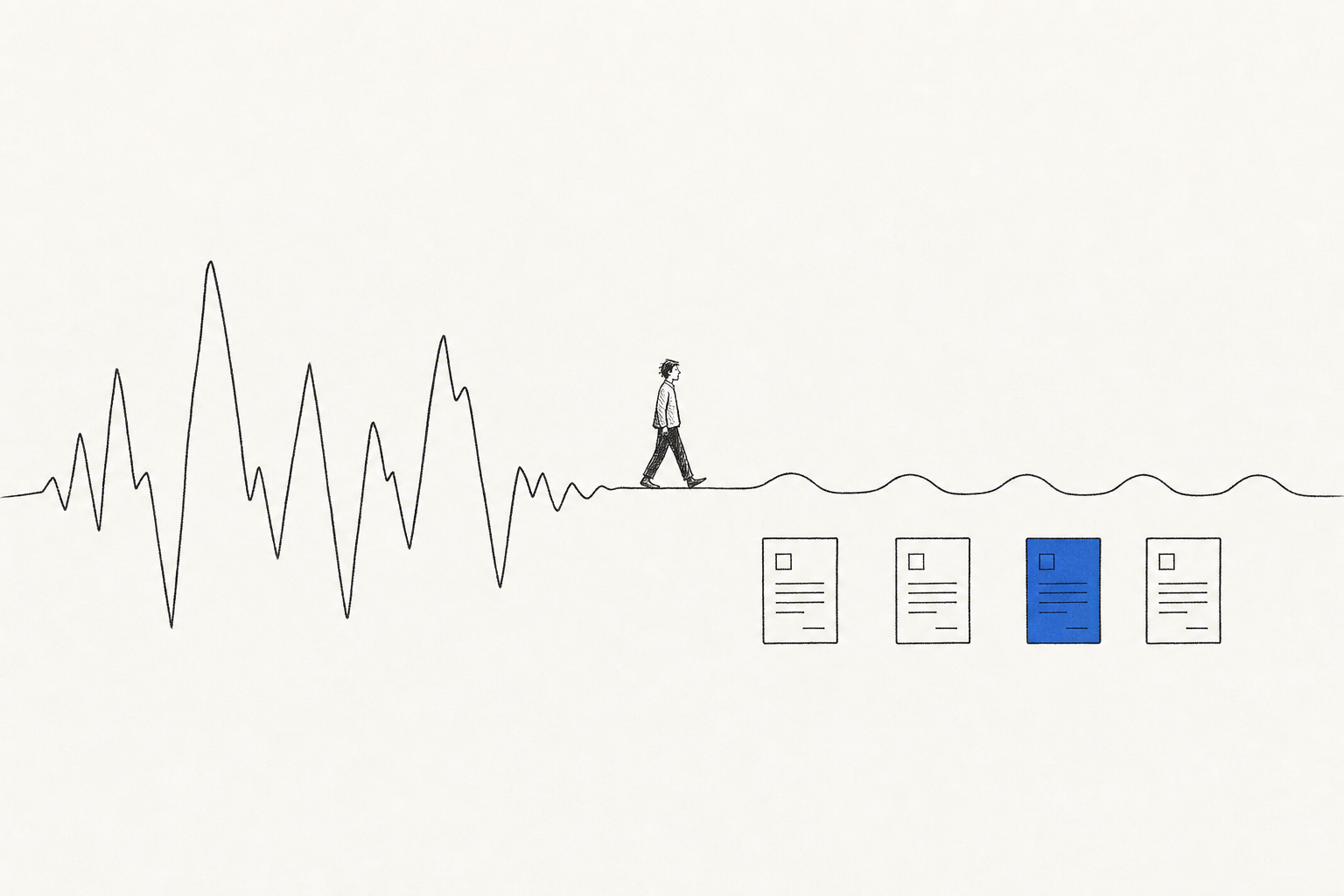
Every freelancer knows the shape of the graph. March: three projects land at once, you're turning work away. May: crickets, and you're refreshing your inbox like it owes you money. Somewhere along the way you started calling it "the nature of freelancing" — as if the swings were weather.
They're mostly not. They're a billing model. Project work means every month starts at zero: income arrives in lumps whenever a project happens to end, and the gap between lumps is yours to finance. The Federal Reserve's latest household survey puts numbers on how common that is: 59% of self-employed adults say their income varies month to month, against 34% of non-retirees overall (Fed SHED, 2024). Being your own boss nearly doubles your odds of not knowing what next month pays.
What the swings actually cost
- Missed bills, directly. 11% of US adults struggled to pay bills in the past year specifically because their income varied — up slightly from 10% the year before (Fed SHED). Not because they earned too little across the year; because it arrived in the wrong months.
- The buffer most people don't have. JPMorgan Chase Institute's landmark study of 6 million families' bank accounts found the median family's income moves 36% month to month, and 65% lack the roughly six weeks of take-home pay in liquid savings needed to ride out an income dip that lands alongside a spending spike (JPMC Institute). Freelancers live at the sharp end of that math.
- The people selling time figured this out. In SparkToro's 2025 survey of digital agencies, 85% primarily work with clients on a retainer basis, up from 81% in 2024 (SparkToro). Agencies are just freelancers with payroll — they can't afford feast-or-famine, so they engineered it out.
- And it correlates with earning more, not less. In a HoneyBook/Harris Poll survey of 700+ independent marketing and creative business owners, the six-figure earners had a trait in common: at least $45,000 of their annual income came from retainer agreements (HoneyBook). The retainer isn't the consolation prize for freelancers who can't land big projects. It's what the big earners run on.
Turning a client into a retainer
You don't need new clients for this. You need a different last conversation with a good existing one. Three moves:
1. Sell the standing slot, not a bundle of hours. "For $2,400 a month you get up to 20 hours and a 48-hour turnaround; unused hours don't roll over, and my calendar holds a slot for you." The client isn't buying hours — they're buying the guarantee that when they need you, you're not mid-feast with someone else.
2. Convert at the moment of momentum. The best time to propose a retainer is the week you deliver a project they're happy with. "Most clients need 10–15 hours a month of this ongoing — want me to hold a slot from September?" beats any cold pitch you'll ever write.
3. Price the famine in. A retainer is worth a modest discount against your project rate — you're trading peak pricing for certainty, and that trade is the whole point. What it's not worth is a big discount: the client is getting certainty too (availability, priority, no re-onboarding), and per the data above, they know exactly what that's worth.
The boring part is the part that pays
A retainer only smooths your income if the invoice actually goes out every month, on time, without you rebuilding it from scratch while juggling delivery work. This is the least glamorous automation in RivitPay and maybe the most useful: open last month's invoice, press duplicate, adjust anything that changed, send. Same client, same terms, under a minute — with automatic reminders, written as a plain sentence in your own words, doing the chasing if the due date slips:
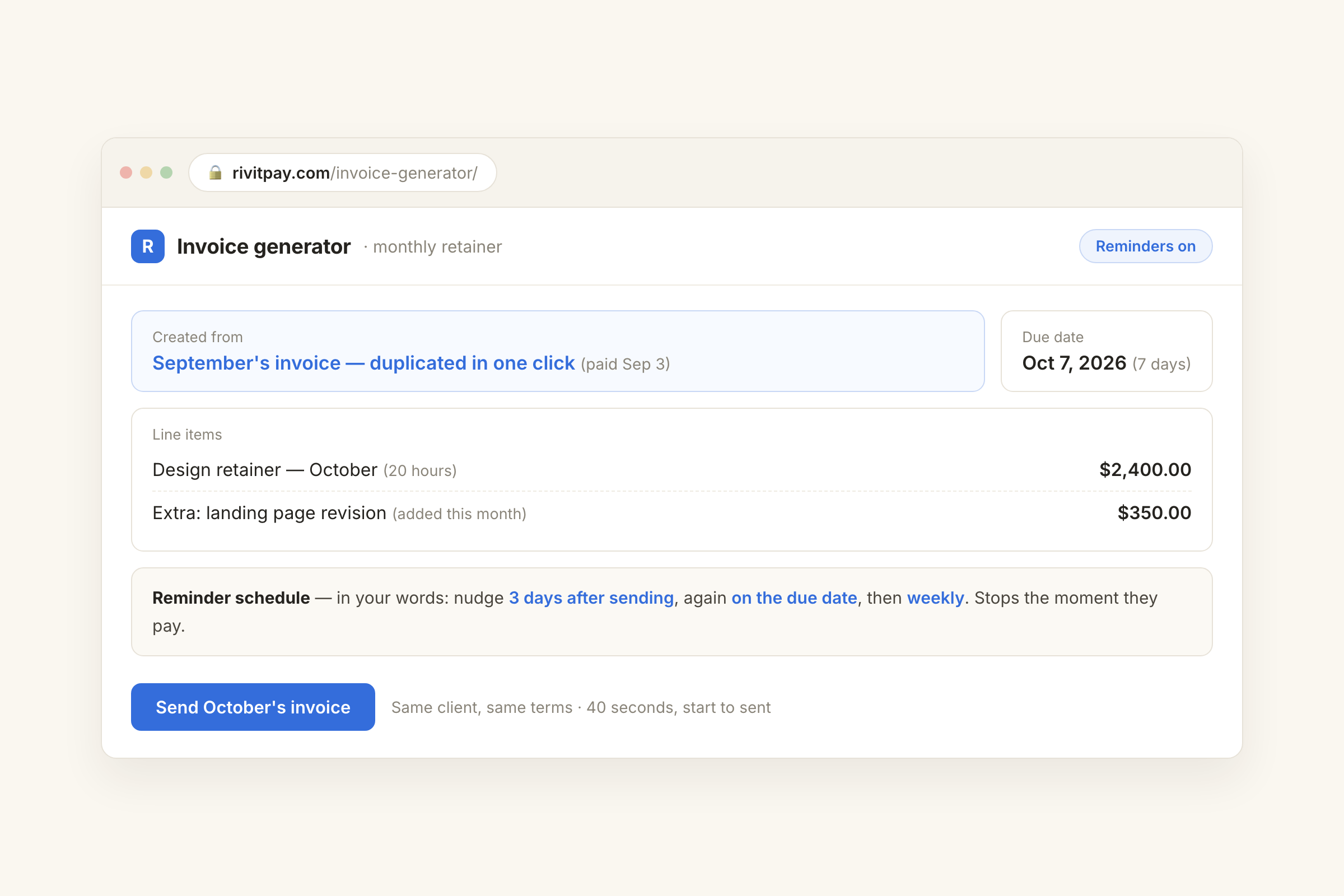
Notice what's missing: there's no "store the client's card and auto-charge it monthly." That's deliberate. Auto-charging puts you in the business of holding payment authority over your clients — mandates, retries, awkward emails when the charge bounces. The duplicate-and-send loop keeps the client in control of paying and you out of card-custody, while the Pay online button (card or bank, settling to your own Stripe account) keeps the paying itself down to a click. The reminders stop the moment the payment webhook fires, so a client who has paid is never nudged. (Reminder mechanics — and why chasing with information beats chasing blind — are covered in Chasing Invoices Is a Part-Time Job.)
Same work, different shape
Nothing about your craft changes. The only thing that changes is the shape income arrives in: a jagged line becomes a floor you can plan rent around, with project spikes on top. Feast or famine was never the nature of freelancing. It was just the default billing model — and defaults, as ever, are yours to change.
Duplicate, adjust, send — with reminders that chase in your words and stop on payment. Free until you've collected $5,000.
Make an invoice — free, no signup