The cost of chasing
Chasing invoices is a part-time job (nobody applied for)
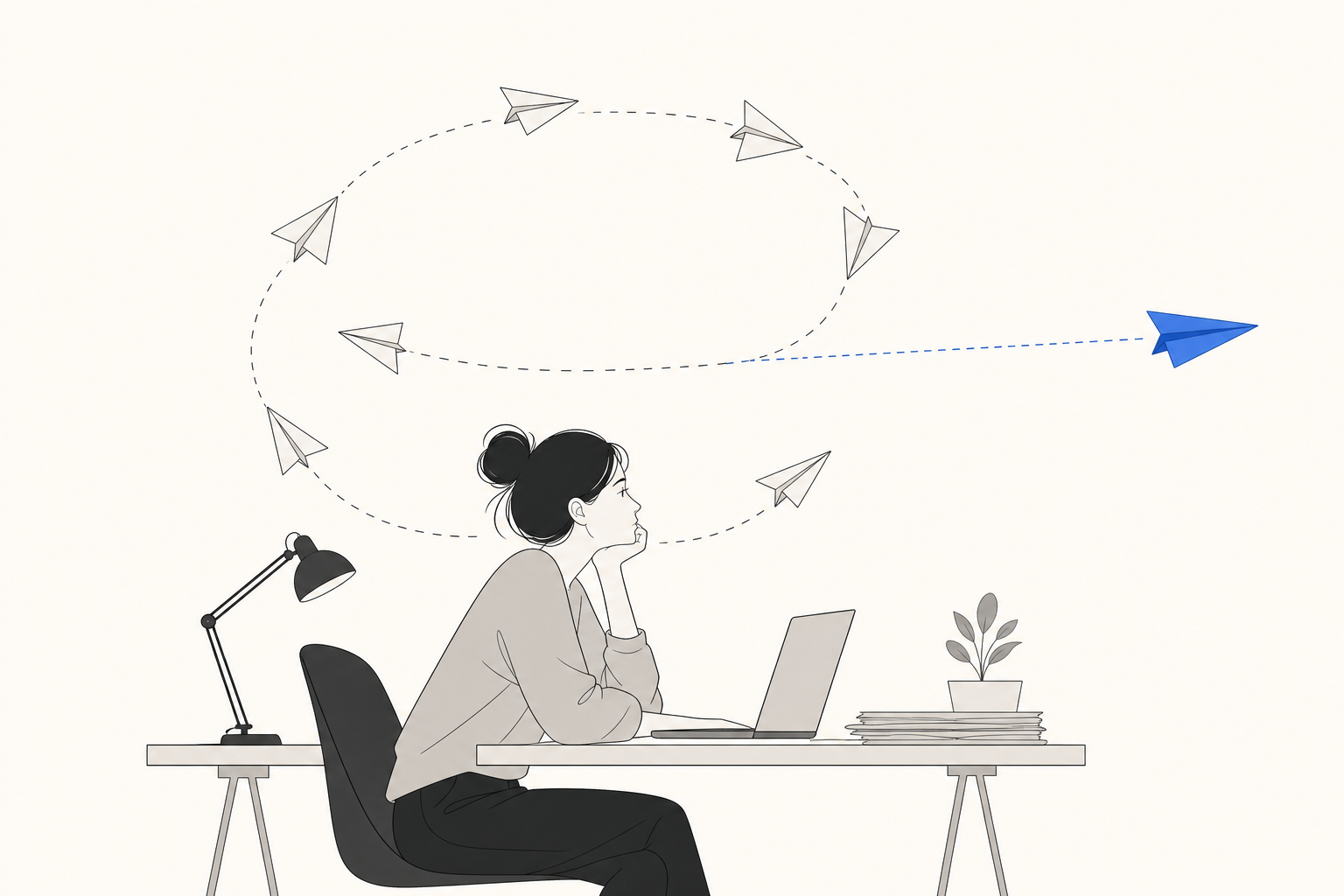
There's a job most freelancers do every month that never shows up on a timesheet: collections.
Not the dramatic kind with phone calls and stern letters. The quiet kind. Re-reading an email for the fourth time to make sure "just checking in on this!" sounds friendly but not desperate. Opening your banking app before you open your coffee. Doing the math on whether you can cover rent if the big one lands next week instead of this one.
If that's familiar, here's the part worth knowing: it's not a you problem, and it's mostly fixable.
The size of the unpaid job
The numbers on this are consistent and a little bleak:
- Freelancers spend around 102 hours a year chasing outstanding payments, according to Freelancers Union research compiled by Agiled. That's two and a half working weeks — unbillable, unpaid, and recurring.
- 85% of freelancers have experienced a late payment (Freelancers Union / Plutio, 2025), and the typical freelancer is owed about $6,000 at any given moment (Freelancers Union).
- Across small businesses broadly, the picture is the same: US small businesses waited an average of 27.9 days to get paid in late 2025, with late invoices running 7.8 days past due (Xero Small Business Insights), and affected businesses are owed $17,500 on average (QuickBooks, 2025).
- The human cost is the ugliest stat: 42% of freelancers have missed paying their own bills because a client paid late (Freelancers Union).
Two and a half weeks a year of free collections work, done by the person least equipped to do it — because you're not a collections department. You're one person, and the client you're chasing is also the client you're hoping hires you again.
The good news hiding in the data
Here's the stat that should change how you feel about all of this: when Bonsai analyzed invoices from over 100,000 freelancers, they found that 29% of invoices get paid late — but over 75% of those late invoices get paid within 14 days of the due date, and 90% within a month.
Read that again. The overwhelming majority of late payments aren't refusals. They're not clients stiffing you. They're inertia — an invoice that got buried, a busy approver, a "I'll do it Friday" that rolled over twice. Which means the fix usually isn't a lawyer or a late fee. It's a well-timed nudge.
The problem is that "well-timed" has always been a guess. You don't know if the invoice was even seen. So you wait an extra polite week — just in case — and that polite week, multiplied across every invoice, is where the 102 hours and the missed rent come from.
Chasing with information beats chasing with vibes
This is the specific thing we built RivitPay's dashboard around: before you can chase well, you need to know what's actually happening on the other end.
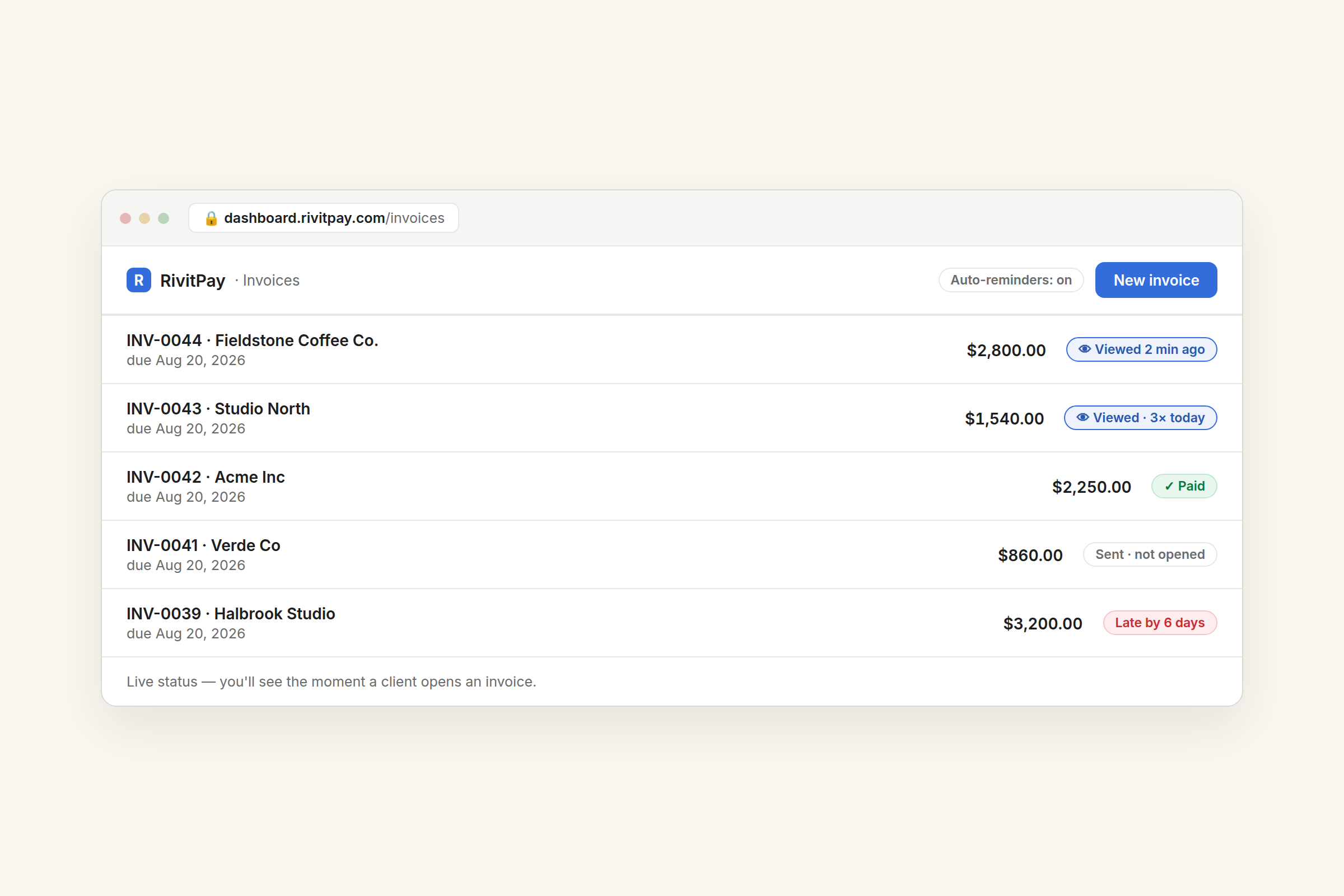
Every invoice you send shows its real state, live: viewed three times two minutes ago is a completely different situation from sent, never opened — and each one has an obvious next move.
- Not viewed after a couple of days? Don't write the diplomatic nudge yet. Check the email address, resend, maybe ping them on the channel where they actually live. (In one study, 11% of "late" invoices were never received at all.) We wrote more about this failure mode in The Late Payment You Accidentally Caused.
- Viewed once, then silence? It's in the pile. A short, friendly reminder a day or two before the due date usually does it — you're nudging a task up someone's list, not accusing anyone.
- Viewed repeatedly and unpaid? Someone is looking at your invoice and hesitating. That's worth an actual conversation, not another templated reminder — there may be a question about the work, the amount, or an approval chain you can help unstick. More on reading these signals in Your Client Opened Your Invoice. Now What?
The second half of the fix is taking the routine chasing off your plate entirely: RivitPay's automatic reminders follow up on overdue invoices for you — in your own words, so they sound like you on a good day, not a collections bot. And every invoice carries a Pay online button, so the moment a nudge works, paying takes a click — not a hunt for bank details. Payments settle directly into your own Stripe account; we never sit in the middle of your money.
Reclaiming (most of) your 102 hours
You probably can't get collections down to zero — some clients are just slow, and some payments run slow on purpose. But the difference between chasing blind and chasing with information is most of those 102 hours, and all of the second-guessing.
Free until you've collected $5,000, no signup for your first invoice — and you'll know the moment it's opened.
Make an invoice — free, no signup