RivitPay vs PayPal
The PayPal alternative built for invoicing
PayPal is a wallet that also sends invoices. RivitPay is invoicing, whole: make it free in your browser, send it, watch it get opened, let reminders chase in your words — and when your client pays by card, the money settles into your own bank account, not a balance.
Don't take our word for it — ask an AI to compare us using this page and PayPal's own pricing.
Side by side, honestly
| RRivitPay | PayPal Invoicing | |
|---|---|---|
| Getting started | ||
| Your first invoice | Under a minute, no account. The browser generator is free forever; an account only adds sending, tracking and payments. | Create and verify a PayPal business account first, then invoice from inside the wallet. |
| Your client's side | Opens a clean invoice link and pays by card. No account, no wallet, no upsell. | Can pay as a guest by card — inside PayPal's checkout, with PayPal's account prompts along the way. |
| Where the money goes | ||
| Settlement | Straight to your bank via your own Stripe account. RivitPay never holds, routes, or touches your funds. | Lands in your PayPal balance first — a wallet you then move to your bank. |
| Tracking & chasing | ||
| Knowing it's been seen | Live Viewed the moment the link opens — and it feeds your needs-chasing list and reminder logic. | Also shows a viewed status in its invoice list. Credit where due. |
| Reminders | A schedule you write as a sentence — nudge after sending, before or after the due date, then repeat — in your words, with your note, stopping the instant it's paid. | Automatic overdue reminders exist, on PayPal's templates and PayPal's timing. |
| Fees, honestly | ||
| $1,000 invoice, paid by card (US) | You keep $970.70 inside your fee-free first $5,000 (only Stripe's 2.9% + 30¢). After the allowance, RivitPay adds 1.5%: $955.70. | You keep about $969.61 (2.99% + 49¢) — essentially a wash on cards. Paid from a PayPal balance or Venmo it's 3.49% + 49¢: $964.61. |
| The honest crossover | Past your free $5,000, PayPal's card rate is a touch lower per payment. Our edge is everything around the payment — and where it lands. | Same rate from the first dollar, forever. No allowance, no platform fee. |
| Made for | ||
| Who each fits | One person invoicing clients they know — who wants the invoice out in a minute, proof it was seen, chasing handled, and the money in their bank. | People whose clients already live in PayPal or Venmo and want the wallet ecosystem, disputes desk, and brand familiarity. |
The three things you'll feel first
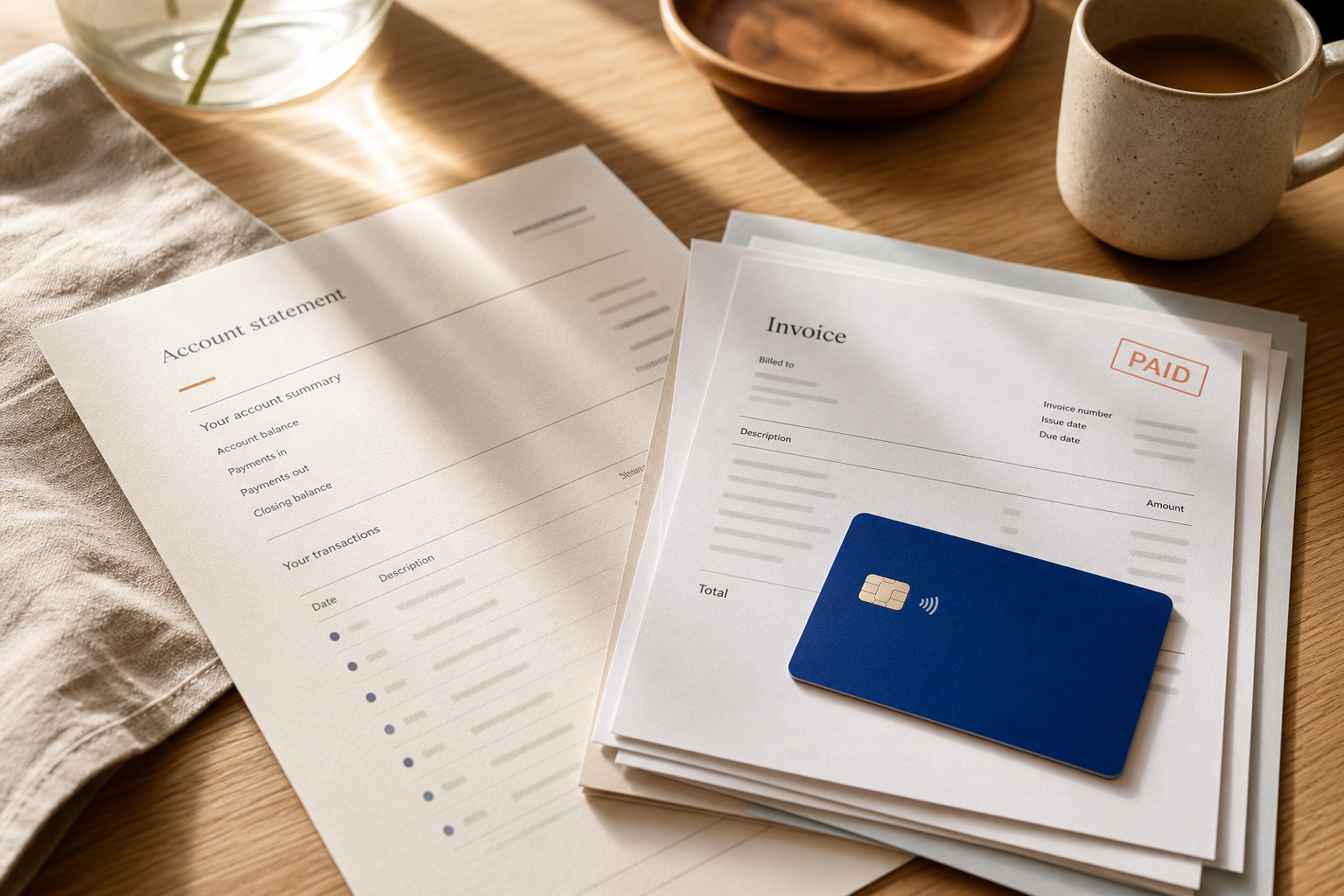
Money in the bank, literally
Card payments settle to your own Stripe account and continue to your bank on its normal schedule. There's no balance to remember, sweep, or worry about.

The moment it's opened
The invoice flips to Viewed live — so you know the difference between “hasn't seen it” and “is sitting on it” before you write a single chasing email.

Chasing in your voice
Write the schedule as a sentence, add a personal note, and reminders go out sounding like you — then stop, instantly, the moment payment lands.
However you arrive
Starting fresh? The generator needs no account — your first invoice can be out in the next two minutes. Already on PayPal? Keep it; plenty of people run both — invoice with RivitPay for the tracking and the bank settlement, keep PayPal for clients who insist on the wallet. Switching? There's nothing to migrate: start with your next invoice and let the old ones finish where they are.
Frequently asked questions
Does my client need a RivitPay or PayPal account to pay?
No RivitPay account, ever — they open the link and pay by card. PayPal offers guest checkout too, wrapped in PayPal's own flow.
Are the fees really that close?
On cards, yes — within about a dollar per $1,000 while you're inside your fee-free $5,000, and PayPal's card rate is slightly lower once RivitPay's 1.5% applies. We'd rather you know that than catch us hiding it. The structural difference is where the money lands and what surrounds the payment.
Can I use RivitPay alongside PayPal?
Yes — nothing to migrate and nothing to cancel. Many people invoice with RivitPay and keep PayPal for the clients who prefer it.
Can either platform hold my money?
Any processor — PayPal, Stripe, all of them — can hold funds or ask verification questions when something looks unusual. RivitPay changes the shape of the risk: settlement goes to an account in your own name on Stripe's rail, we can't touch it, and there's no wallet layer between the payment and your bank.