Payment terms
Nobody actually pays in 30 days (so stop defaulting to net-30)
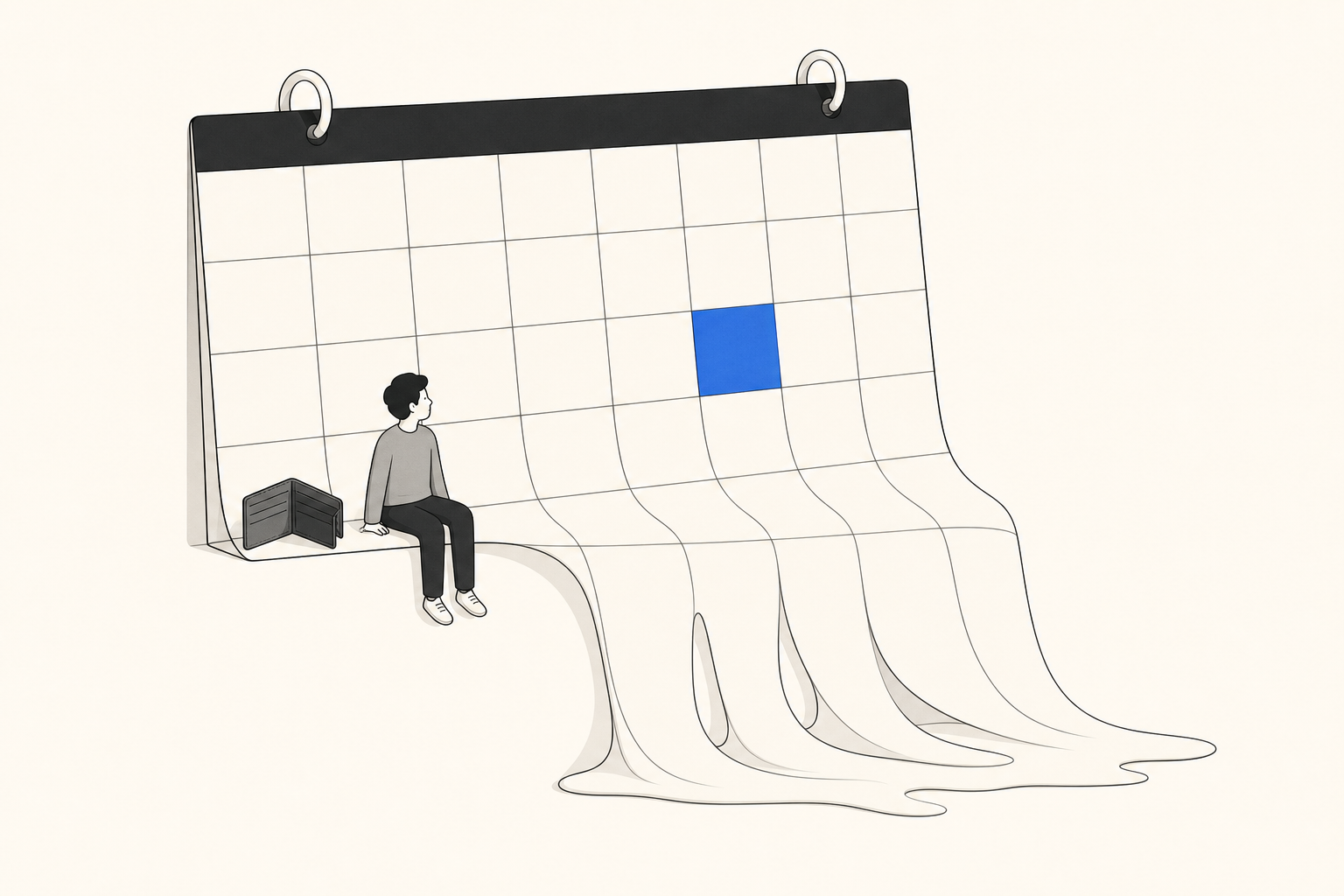
"Net-30" sounds like a rule. It reads like one, sitting there at the bottom of your invoice in small confident type. Payment due within 30 days.
In practice, net-30 is the start of a negotiation you didn't know you'd entered. The client's accounting system reads it as "we have a free month." Then the invoice waits for the next payment run. Then someone's on holiday. US small businesses waited an average of 27.9 days to get paid in late 2025 — and that's the average across all terms, with late invoices dragging another 7.8 days past due (Xero Small Business Insights). Start from net-30 and you're realistically financing your client for five to six weeks.
Here's the thing nobody tells new freelancers: net-30 is a convention, not a law. You picked it because the template had it. You're allowed to pick something else.
What the data says about terms
A few patterns worth building your terms around:
- 29% of freelance invoices get paid late across the board, per Bonsai's analysis of 100,000+ freelancers — so your terms should assume some slippage rather than hope it won't happen.
- The bigger the invoice, the later it pays. Invoices over $20,000 were 3× more likely to be paid late than invoices under $100 (Bonsai). Big invoices hit approval chains; approval chains eat calendars. That's an argument for breaking large projects into smaller milestone invoices, not one heroic final bill.
- Most freelancers give 2–4 weeks to pay (Bonsai) — so a 7- or 14-day term won't make you an outlier, whatever the template says.
- And zooming out: 43% of the total value of US B2B invoices is overdue at any given time (Atradius, 2025). The system defaults to slow. Your defaults are the counterweight.
Terms that actually protect you
None of this requires being difficult. It requires being specific, three ways:
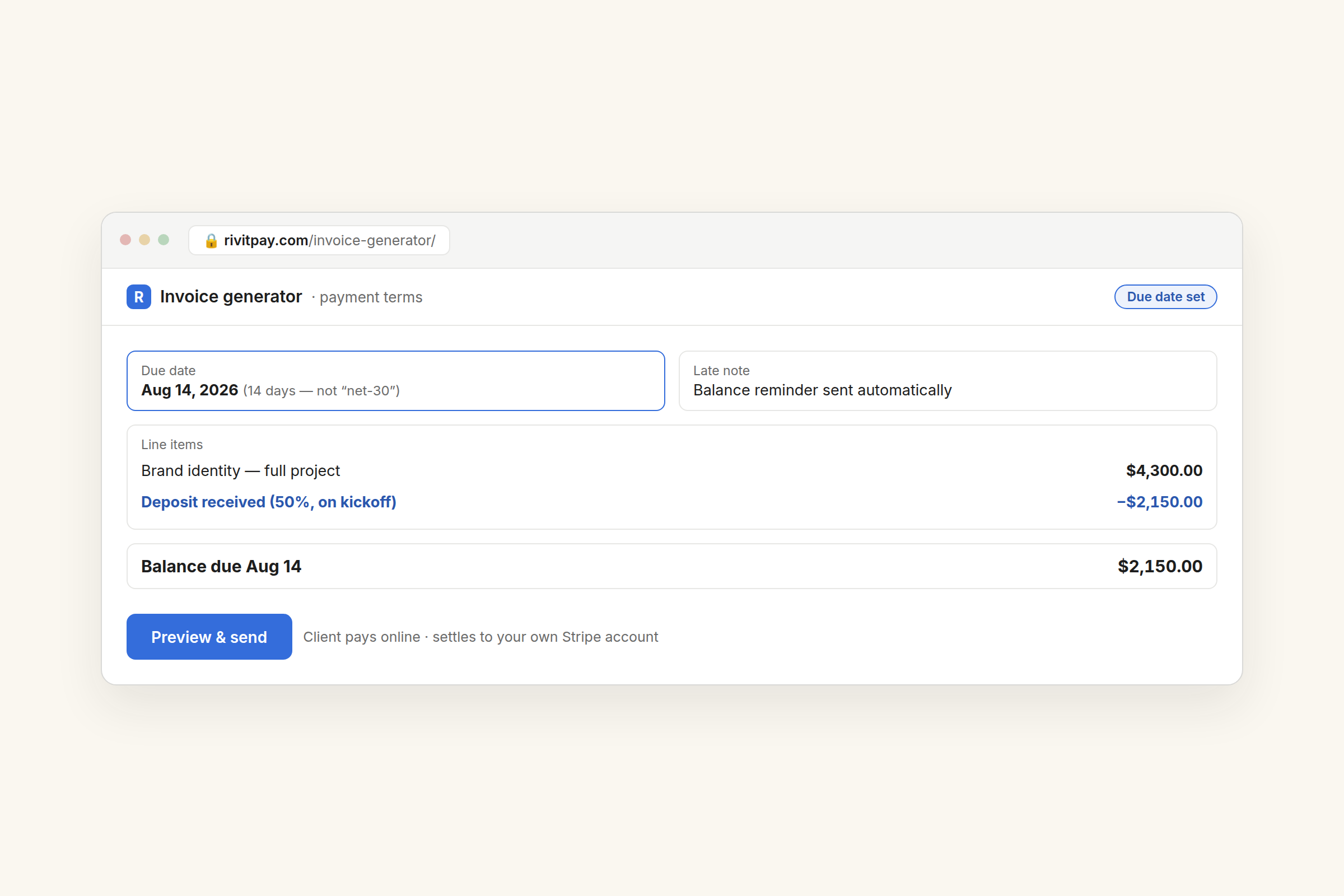
1. A date, not a duration. "Net-30" makes the client do date math; "Due August 14" gets put in a calendar. Vague terms like "due on receipt" feel fast but consistently underperform a concrete date — a vibe can't be scheduled. (An invoice missing a clear due date is also one of the classic self-inflicted delays we covered in The Late Payment You Accidentally Caused.)
2. Shorter terms for smaller invoices. A $600 invoice does not need a month of processing time. 7 or 14 days is normal, reasonable, and — per the data above — well within what most freelancers already do. Save 30 days for clients whose accounts-payable process genuinely needs it, and say yes to it as a concession, not a default.
3. A deposit before work starts. The single most effective payment term is the one collected before there's anything to chase: 30–50% upfront for new clients or large projects. A deposit doesn't just protect you from nonpayment — it confirms the client can pay, reveals how they handle money before you've sunk 40 hours in, and turns the final invoice into a smaller, faster-moving number (see point about big invoices paying late, above).
Here's how that looks when you set it up in RivitPay's generator — due date as a real date, deposit reflected right on the invoice, balance clearly separated:
Then make paying easier than delaying
Terms set expectations; friction decides outcomes. Every step between "approved" and "paid" — finding your bank details, filing a transfer, asking which account — is a place the payment can stall for a week. So the invoice itself carries a Pay online button: card or bank, in any of 45 currencies, settling directly into your own Stripe account. (Sending abroad? Currency choice has its own traps — we wrote about them in Getting Paid Across Borders.)
And because RivitPay shows you live when your client opens the invoice, your due date finally has a working clock: if the invoice sits unopened for three days, you know the 14-day countdown hasn't really started in the client's head — and you can fix that on day three instead of discovering it on day fifteen. When the date does slip, automatic reminders pick up the chase for you, in your own words.
The template is not the law
Next invoice, try this: a real due date, 14 days, a deposit if the project's big, and a pay button on the invoice. Every one of those is a lever the net-30 template quietly told you that you didn't have.
A real due date, 14 days, a deposit if the project's big, and a pay button on the invoice. Free until you've collected $5,000.
Make an invoice — free, no signup