Getting paid, legally
Your unpaid invoice might have a law behind it now
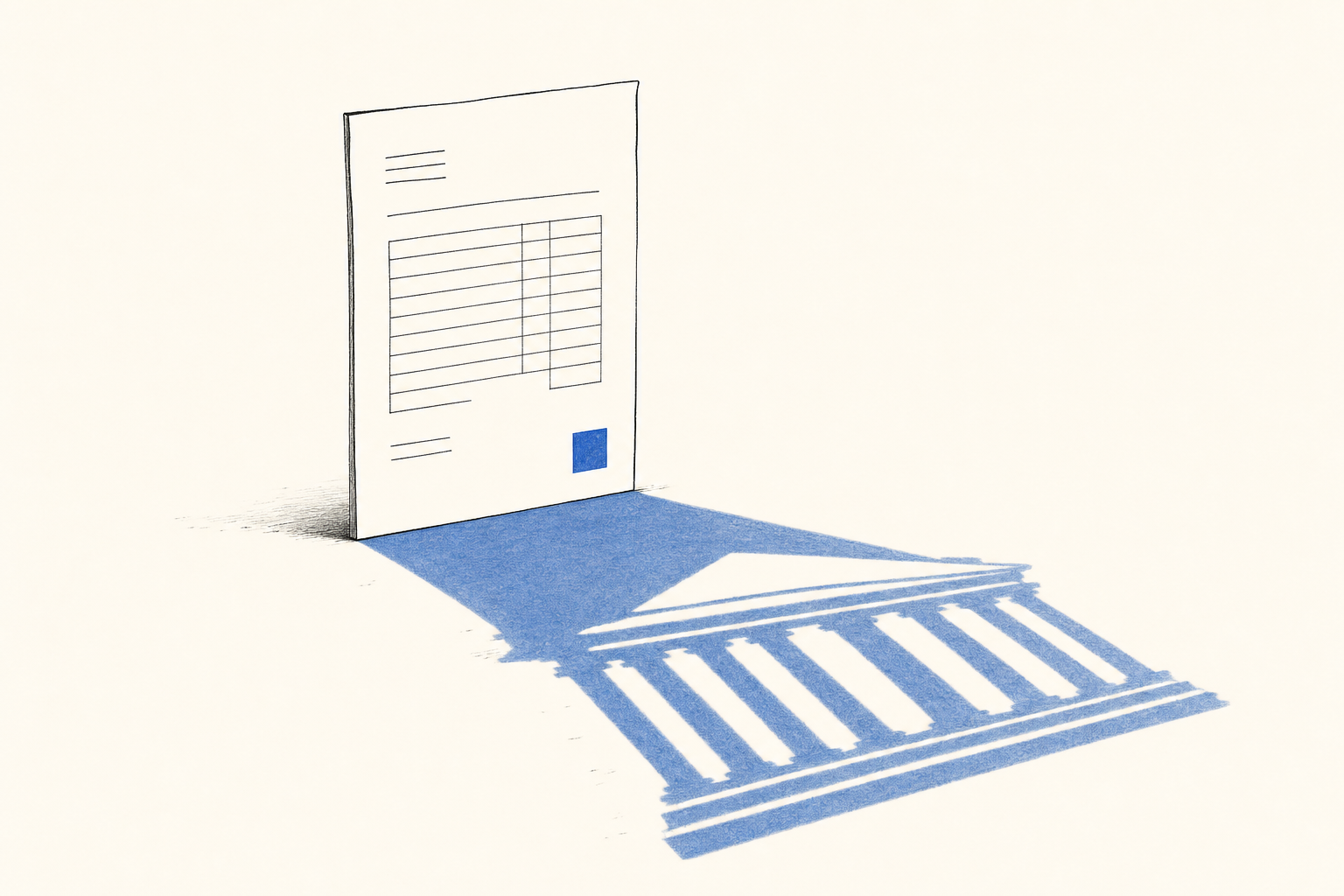
For most of freelance history, an unpaid invoice was a politeness problem. You could ask nicely, ask firmly, ask again — and if the client simply declined to pay, your options were a collections agency, small claims court, or writing it off and warning your friends. The client knew that. It's why they could go quiet.
That's been changing, state by state, and quietly enough that most freelancers haven't noticed. If you work in New York, Illinois, Los Angeles, Seattle, or a growing list of places, your invoice now has an actual statute standing behind it — one with deadlines, damages, and a complaint process. The power asymmetry didn't disappear. But it shrank, in writing.
The backdrop, from a May 2022 survey by Freelancers Union and six creative-industry guilds: 62% of New York-based freelancers had lost wages to nonpayment at least once in their career, and 91% had experienced late or overdue payment (Freelancers Union). Numbers like those are why these laws exist.
The laws, plainly
- New York State — Freelance Isn't Free Act (effective August 28, 2024). Any freelance engagement worth $800 or more — one contract, or aggregated across all work for the same client over the preceding 120 days — must have a written contract (NY GBS §1410). Payment is due by the date the contract sets, or within 30 days of completing the work if it doesn't. Win a nonpayment claim and you're entitled to double damages plus reasonable attorneys' fees and costs, with additional remedies for clients who make a pattern of it (§1414).
- Illinois — Freelance Worker Protection Act (effective July 1, 2024, before New York State's). Covers work worth $500 or more over 120 days; payment due by the contract date, or within 30 days of completion if the contract sets no date (820 ILCS 193).
- New York City got there first — its original Freelance Isn't Free Act has been in effect since May 2017, and it has a track record: at least 773 freelancers recovered a combined $2.9 million through the city's complaint process in its first five years (NYC DCWP five-year report). This model works, measurably.
- The West Coast: Seattle's Independent Contractor Protections Ordinance took effect September 2022, and Los Angeles followed for contracts from July 1, 2023 — written contract at $600+ per calendar year, payment within 30 days of completion if no date is set, and damages up to double the unpaid amount (LA Office of Wage Standards).
Different thresholds, same architecture: written terms, a payment clock, and consequences for ignoring both.
What this changes about your invoice
1. "Can we get this in writing?" is now the law's phrasing, not yours. The awkwardness of asking a friendly client for written terms just inverted: in covered states, the written contract is a legal requirement on them as much as you. You're not being difficult — you're being compliant. A one-page agreement or even a detailed invoice with terms both parties acknowledge covers the essentials: scope, rate, and a payment date.
2. The payment clock only ticks if there's a date. Every one of these laws works the same way: payment is due by the contract date, and the 30-day default only kicks in when no date was set. Which means a vague invoice hands the schedule back to the client. Set a real due date, in writing, every time — the same advice from Nobody Actually Pays in 30 Days, now with statutory backing.
3. Records win complaints. Whether it's the NYC process, an Illinois claim, or just a firm email that mentions the statute, everything runs on the paper trail: what was agreed, when it was delivered, when the invoice went out, when the client saw it, what reminders followed. Here's what that looks like when the invoice itself keeps the record — sent, viewed (timestamped), reminded, paid:
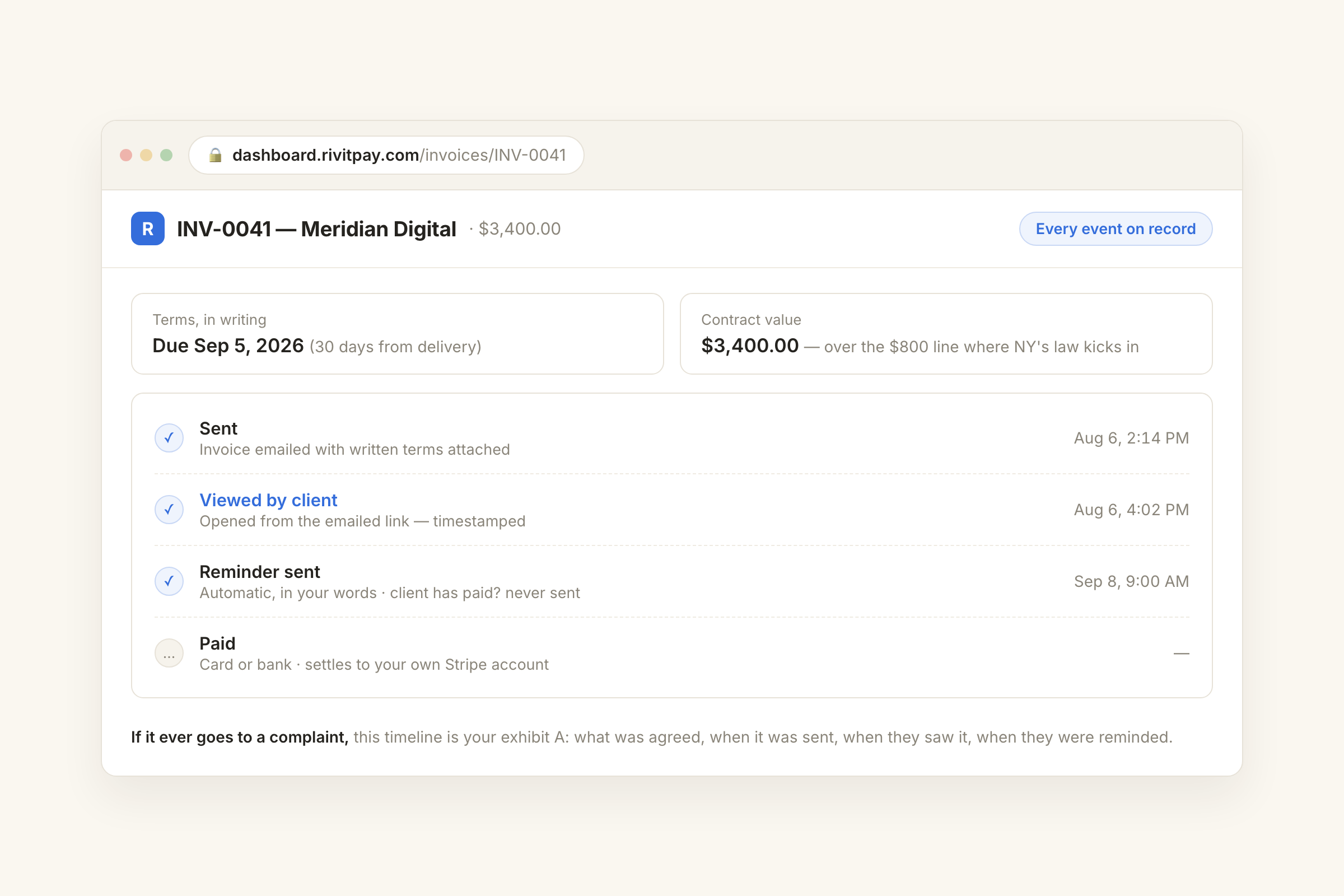
That viewed-timestamp does double duty. Day to day, it's how you chase with information instead of guesswork (the whole case for it is in Your Client Opened Your Invoice. Now What?). But it also quietly closes the oldest excuse in the book: "we never received it." And because RivitPay's automatic reminders fire on schedule in your own words, the polite, dated, consistent follow-up record builds itself while you do actual work.
Using leverage you hope never to need
The point of knowing all this isn't to threaten clients with statutes in your first email — nearly all late payment is inertia, not malice, and information-first chasing fixes most of it. The point is that the floor under your politeness got harder. A line like "per our written terms, payment was due August 14" now carries weight in covered states whether or not you ever file anything. Most clients who know the law exists never test it.
The invoice grew a shadow
Freelancing has always run on trust with no backstop. The backstop is being built, jurisdiction by jurisdiction — and it rewards exactly the habits you should have anyway: terms in writing, a real date, a clean record of what happened when. Set those up once, and the law's protection arrives free with every invoice you send.
Every RivitPay invoice carries dated terms and a sent-viewed-reminded-paid timeline. Free until you've collected $5,000.
Make an invoice — free, no signup