The paperwork of getting paid
You can't write off the invoice that never got paid
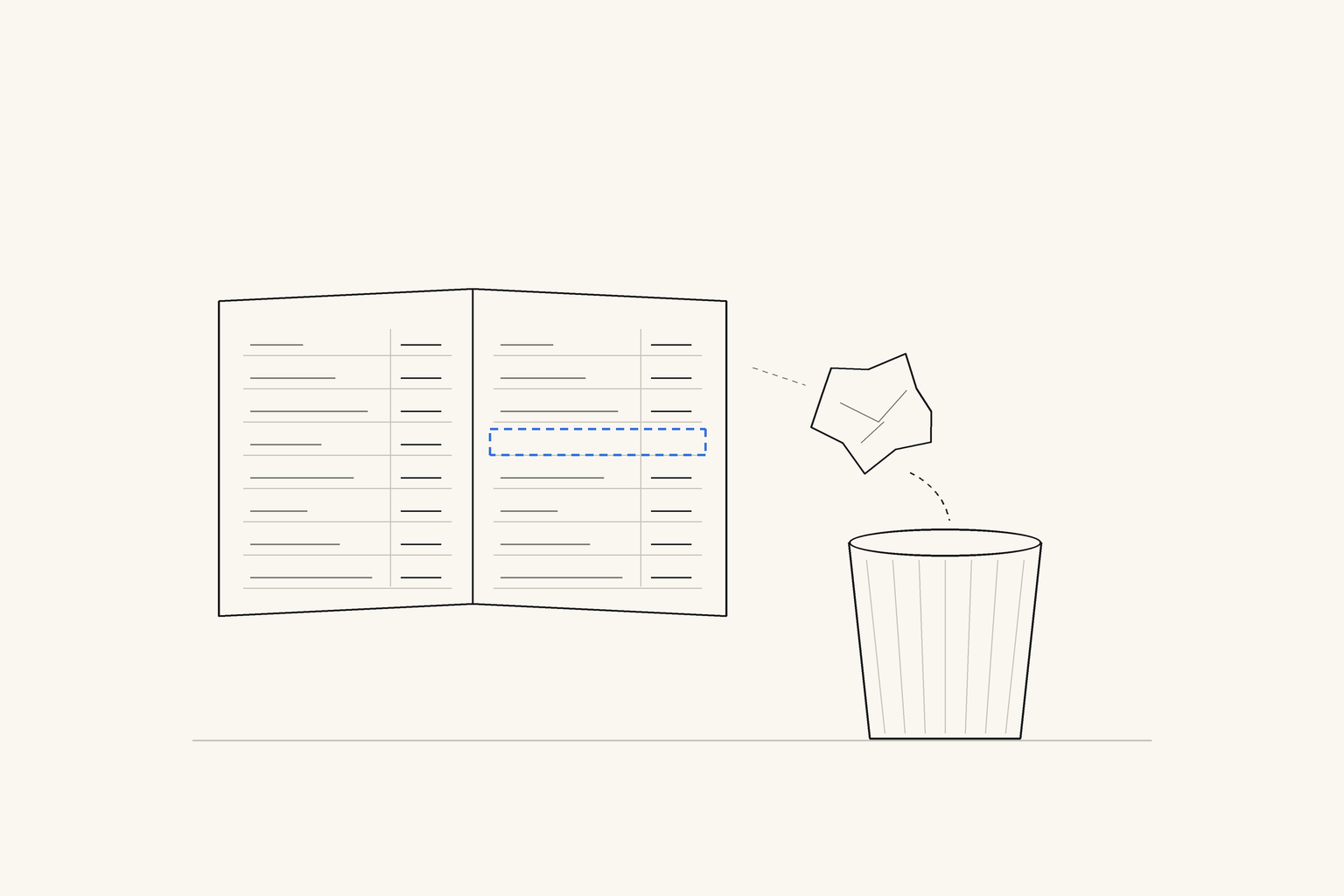
The client stopped answering in June. The invoice was $3,000 for six weeks of work. You've sent the reminders, you've thought about small claims, and you've more or less accepted it's gone. At least, you think, it'll be a write-off at tax time.
For most freelancers it won't. Not because the IRS is being harsh, but because of how freelancers are taxed in the first place. It's worth understanding before you try to put it on a Schedule C.
The rule, in the IRS's words
The IRS's page on bad debt deductions is unusually direct about it: "If you're a cash method taxpayer (most individuals are), you generally can't take a bad debt deduction for unpaid salaries, wages, rents, fees, interests, dividends, and similar items of taxable income."
Fees are what you charge clients. And that "most individuals" covers a lot of people. The IRS's latest sole proprietorship statistics count 31,125,909 nonfarm sole proprietorship returns for tax year 2023, reporting about $2.06 trillion in business receipts. Every one of them filed a Schedule C, and line F of that form asks which accounting method you use. For a freelancer who just invoices and gets paid, the answer is almost always cash.
Why: it was never income
The IRS's small business tax guide spells out the logic. "If you use the cash method of accounting, you normally report income when you receive payment. You can't take a bad debt deduction for amounts owed to you that you have not received and can't collect if you never included those amounts in income."
In other words, a deduction would mean subtracting income you never added. Say you invoiced $60,000 this year and collected $57,000, because one client ghosted on $3,000. On the cash method, your Schedule C gross receipts are $57,000. The missing $3,000 was never on your return, so you never paid tax on it. The tax system has already taken the loss into account by leaving it off. A bad debt deduction would count it twice.
That doesn't make it feel any better. You still did six weeks of work and got nothing. But the time you spent can't be deducted. Your own labour was never a cost on the return. It's what the income was supposed to pay for.
What you can still deduct
The costs of doing the job are a different matter. Under the cash method, Pub 334 says "you generally deduct expenses in the tax year in which you actually pay them." The stock footage, the subcontractor, the software seat you bought for that client: if you paid for them, they're ordinary business expenses, and the client not paying doesn't change that.
A few situations do produce a real business bad debt:
- You use the accrual method. Accrual taxpayers report income when they earn it, so the unpaid invoice was already counted. Pub 334: "You can take a bad debt deduction for an uncollectible receivable if you have included the uncollectible amount in income." Few solo freelancers choose accrual, but if your accountant set you up that way, this is where it helps.
- You lent a client actual money. If you loan money to a client "for a business reason and you're unable to collect the loan after attempting to do so, you have a business bad debt." That's cash out of your pocket, which is different from unpaid fees.
- You'd already counted it as income. The test in every case is the same one the IRS repeats: you can deduct it "only if the amount you were owed is included in your gross income in the current or prior year."
If you are in one of those situations, the IRS wants evidence you tried. "To show that a debt is worthless, you must establish that you've taken reasonable steps to collect the debt," though "it's not necessary to go to court if you can show that a judgment from the court would be uncollectible." Dated reminders and a record of when the client saw the invoice are exactly that kind of evidence.
The trap that runs the other way
The more common mistake isn't trying to deduct an unpaid invoice. It's reporting one as income. If you build your Schedule C from the invoices you sent rather than the payments you received, the ghosted $3,000 ends up in gross receipts and you pay tax on money you never got.
It can also come from the client's side. If a client sends you a 1099-NEC that includes an invoice they never paid, the IRS's long-standing advice (here in a 2023 tax tip) is to contact the payer and "request a copy of the missing document or a corrected document," and to file on time anyway. Fewer of these forms will arrive now that the threshold is $2,000 (we wrote about why most clients won't send one). So your own record of what actually arrived, and when, matters more than ever.
And if the client finally pays next year, that's simply income next year. On the cash method you report it when you receive it, just as you would any other payment.
So the only fix is getting paid
Since the tax code won't help, the effort goes into collecting. In rough order of what works: take a deposit up front on big jobs, so a client who ghosts only owes you the balance. Send reminders on a schedule instead of when you remember. Make paying as easy as one click. And if it really comes to it, small claims court exists for exactly this, at least for the amount and the state you're in.
Where RivitPay fits
A free RivitPay account keeps paid and unpaid separate as you go. The dashboard shows what's outstanding, how many invoices need chasing, and what you've collected this month. Each invoice is marked Viewed when the client opens it and turns red with "Late by" a number of days once it's overdue.
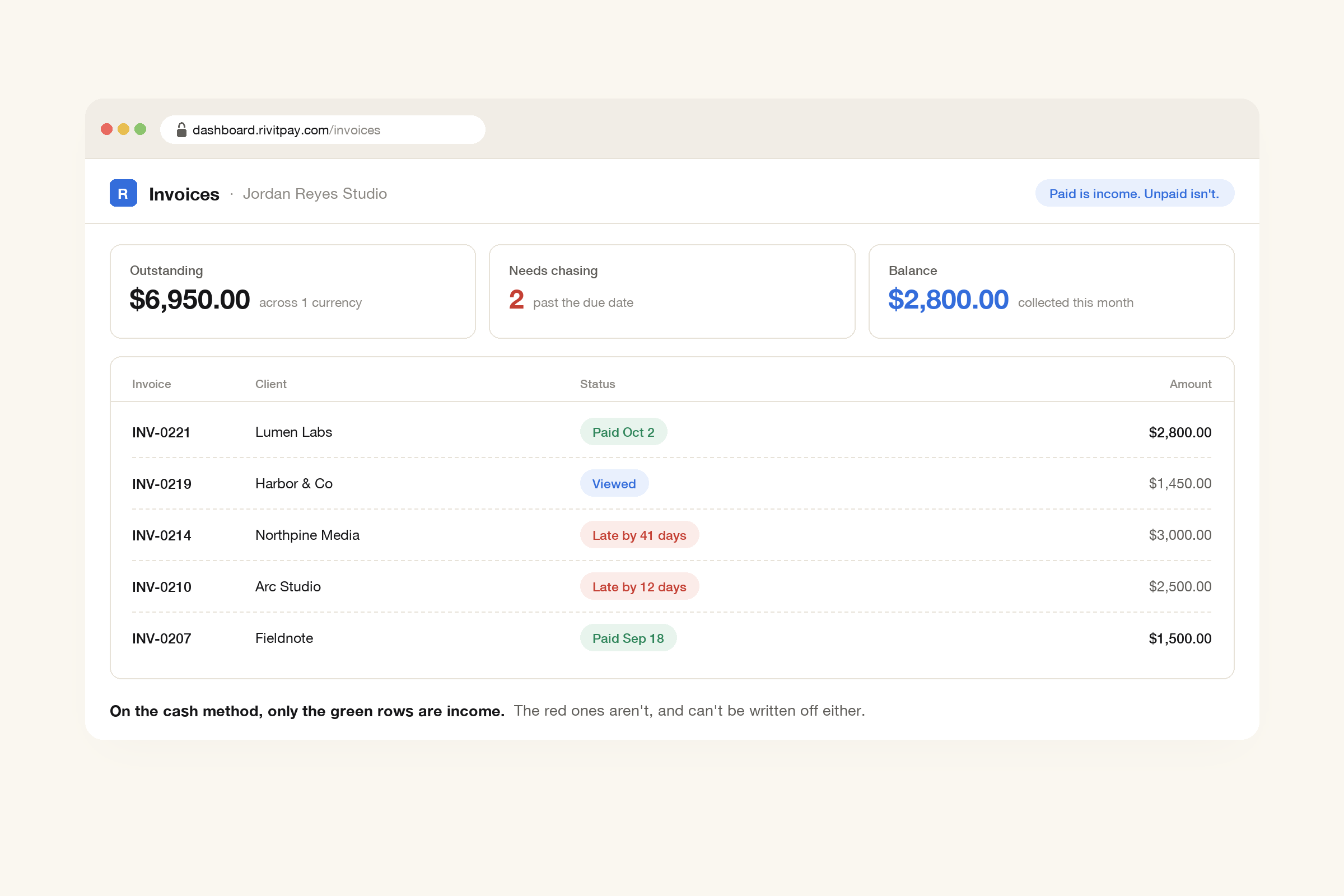
When a client pays by card or bank through the Pay button, the payment goes straight to your own Stripe account and the invoice shows when it was paid. Automatic reminders go out on a schedule you set, in your own words, and stop as soon as it's paid. If an invoice never does get paid, its record shows when you sent it, when the client opened it and every reminder after that. Invoicing is free, and there's no RivitPay fee until you've collected $5,000 through the Pay button.
The invoice that never got paid still cost you something
It cost you weeks of work, not a tax bill. The return already treats it as zero, so there's nothing for a deduction to claw back. Report what you actually received and deduct what you actually spent. Put your energy into the next client paying on time, not into recovering this loss through your taxes.
Invoices that track sent, viewed and paid, with reminders in your own words and a Pay button that settles to your own Stripe account. Free until you've collected $5,000.
Make an invoice, free